
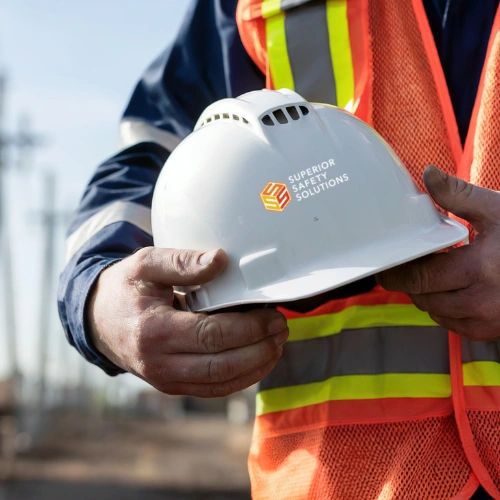
The fall you plan for is the one you survive.
Why fall protection tops every OSHA citation list — and what a defensible program actually requires, from anchorage ratings to rescue planning.
Fall protection is the most-cited OSHA standard.
Year after year, fall protection tops OSHA’s most-frequently-cited list. In construction the trigger is generally six feet above a lower level; in general industry it’s four. Above that line, protection is not optional.
- Guardrail systems — the first line of defense around open sides and edges.
- Safety net systems — where guardrails or personal arrest aren’t practical.
- Personal fall arrest systems — a full-body harness, connector and anchorage rated for the load.
- Covers, positioning systems and warning lines for the situations in between.
Anchorage ratings, competent-person inspections, rescue planning and documented training are what make fall protection defensible. We build the whole program — and train your crew to use it — in English or Spanish.
Training, inspection and rescue.
A compliant program names a competent person, trains every exposed worker, inspects equipment before each use and plans for prompt rescue after a fall. Missing any one of those is where citations — and injuries — happen.
Our consultants build fall-protection programs for roofers, steel erectors, general contractors and anyone working at height, and we train the crews who have to live by them.
This guide is general information for employers, not legal advice. Rules change and details matter — call (732) 243-8883 to talk through your specific situation. Superior Safety Solutions is a private consulting firm and is not affiliated with or endorsed by OSHA or the U.S. Department of Labor.
Keep readingWant a former OSHA insider on the phone instead?
Reading is good. A free consultation is better — call and get answers specific to your operation.